Preparing Your Home for Winter Rain: How to Prevent Water Damage in the Antelope Valley
Winter rain in the Antelope Valley hits a little differently. We don’t get constant storms throughout the year, so when the rain finally shows up, it tends to expose every weak point in a home — small roof issues suddenly become leaks, clogged gutters overflow, and moisture sneaks into places you didn’t even know existed.
At ServiceMaster Restore by Precision, we see a huge spike in water damage calls every winter. The good news? A lot of these issues are preventable with the right steps. Here’s how you can protect your Lancaster, Palmdale, and Antelope Valley home before (and during) the rainy season.
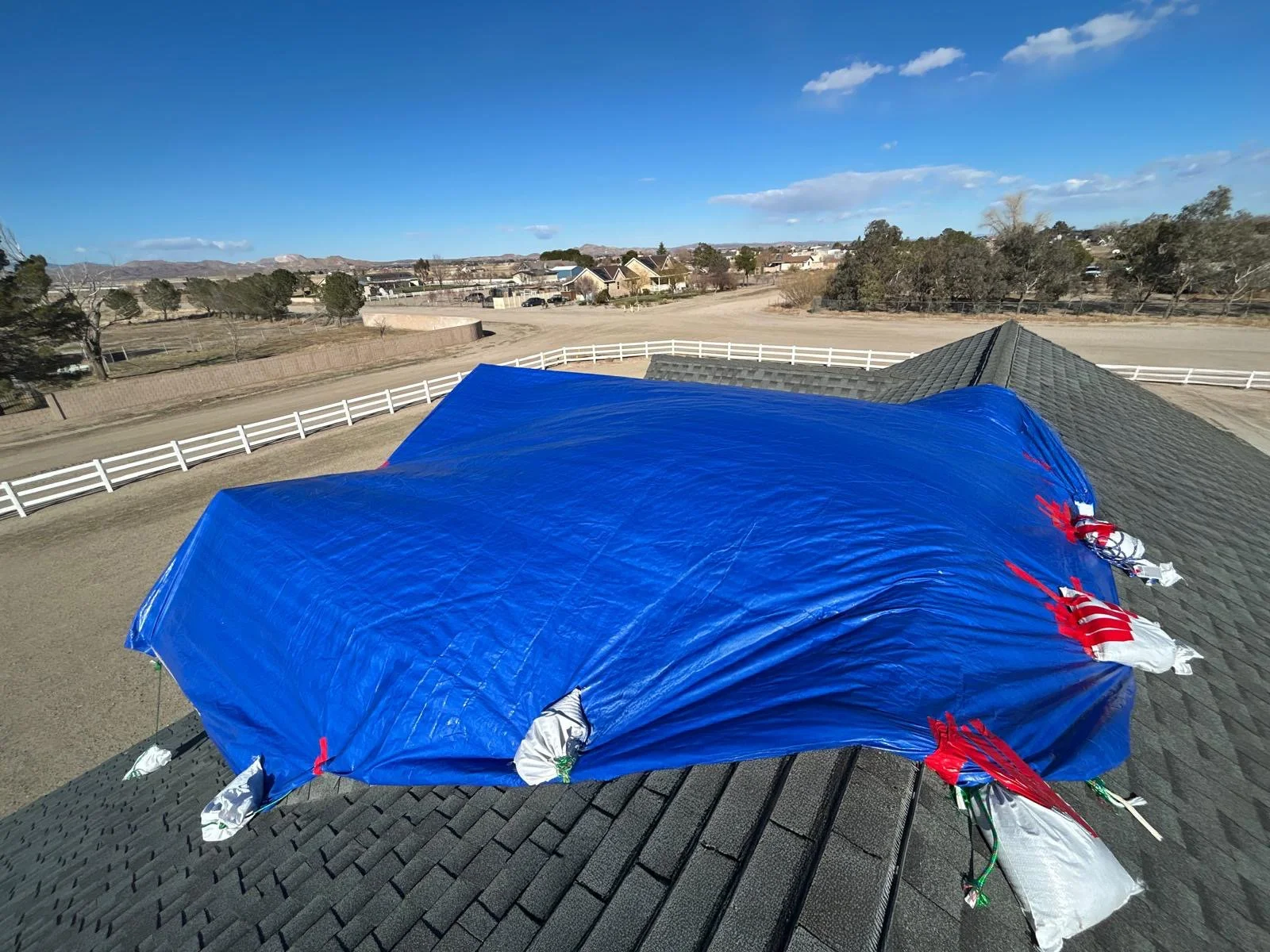
Blue tarp covering the roof of a house
1. Check Your Roof Before the First Storm Hits
Your roof is your first line of defense — and often the most vulnerable.
What to look for:
Missing or lifting shingles
Cracked or brittle shingles
Exposed nails
Gaps around vents or chimneys
Soft spots or sagging areas
Just one storm can push water through even the smallest opening. If you notice anything suspicious, schedule a professional roof inspection. Wind in the Antelope Valley is strong enough to shift shingles, so even newer roofs can develop gaps.
2. Clean and Repair Your Gutters
Gutters that aren’t cleaned will overflow, and that overflow often lands exactly where you don’t want water — right along your foundation.
Quick tips:
Clear leaves and debris
Make sure downspouts flow away from the home
Check for sagging or disconnected sections
When gutters fail, water pools around your home and works its way into walls, floors, and crawlspaces. It’s one of the fastest ways for mold to develop.
3. Ensure the Ground Slopes Away From Your Home
This one comes straight from the EPA — it’s simple but often overlooked.
Walk around your home after a light rain. If you see water pooling near the foundation, you’ve got a problem. Over time, water will break down the soil barrier and seep into your home.
Fixing grading issues early prevents thousands of dollars in future repairs.
4. Inspect Windows, Doors, and Exterior Walls
The desert heat causes caulking and seals to dry out faster, which leads to leaks once the rain hits.
Look for:
Cracked or shrinking caulking
Gaps between stucco and trim
Moisture or staining around windows
If you see condensation forming on the inside of your windows, that’s a sign of high indoor humidity — and high humidity is how mold starts.
5. Keep Indoor Humidity Low
Mold only needs two things: moisture and time.
And during winter, a closed-up home can trap humidity more than you think.
Ideal humidity:
Keep it between 30–50%
Never let it go above 60%
You can grab an inexpensive humidity meter at any hardware store. Use bathroom fans after showers, keep kitchen vents running when cooking, and use a dehumidifier in areas that feel damp or musty.
6. Know the Early Warning Signs of Water Damage
Catching things early can prevent a disaster later.
Watch for:
Bubbling paint
Soft or swollen drywall
Musty smells
Ceiling discoloration
Cold, damp flooring
Dripping sounds during storms
Light brown stains = water damage.
Dark brown or tar-like stains = potential roof leak.
Either way, act quickly.
7. Protect Your Water Heater
Water heaters don’t give warnings — they fail instantly.
Know where your shut-off valve is, and check the area around the heater for:
Moisture
Rust
Corrosion
Warm spots on the floor
A burst water heater can flood a home in minutes.
8. Handle Leaks Immediately — Don’t Wait
The EPA states that drying damp materials within 24–48 hours usually prevents mold.
If you wait longer, you risk:
Hidden mold in walls
Damaged insulation
Warped flooring
Structural issues
If you’re unsure how bad the damage is, call us for an inspection. Waiting is the worst thing you can do.
Don’t Let Winter Rain Catch You Off Guard
A little prep goes a long way — especially in the Antelope Valley, where homes aren’t built for constant rain. If you’re concerned about a leak, notice staining, or want a professional inspection: